
Pre-insulated duct board really has become a go-to for modern HVAC systems that demand better energy performance and tighter air control.
These panels combine insulation and air distribution into one material, so you cut installation time and get a boost in system efficiency.
Traditional metal ductwork usually needs separate insulation wrapping, but pre-insulated boards arrive ready to assemble.
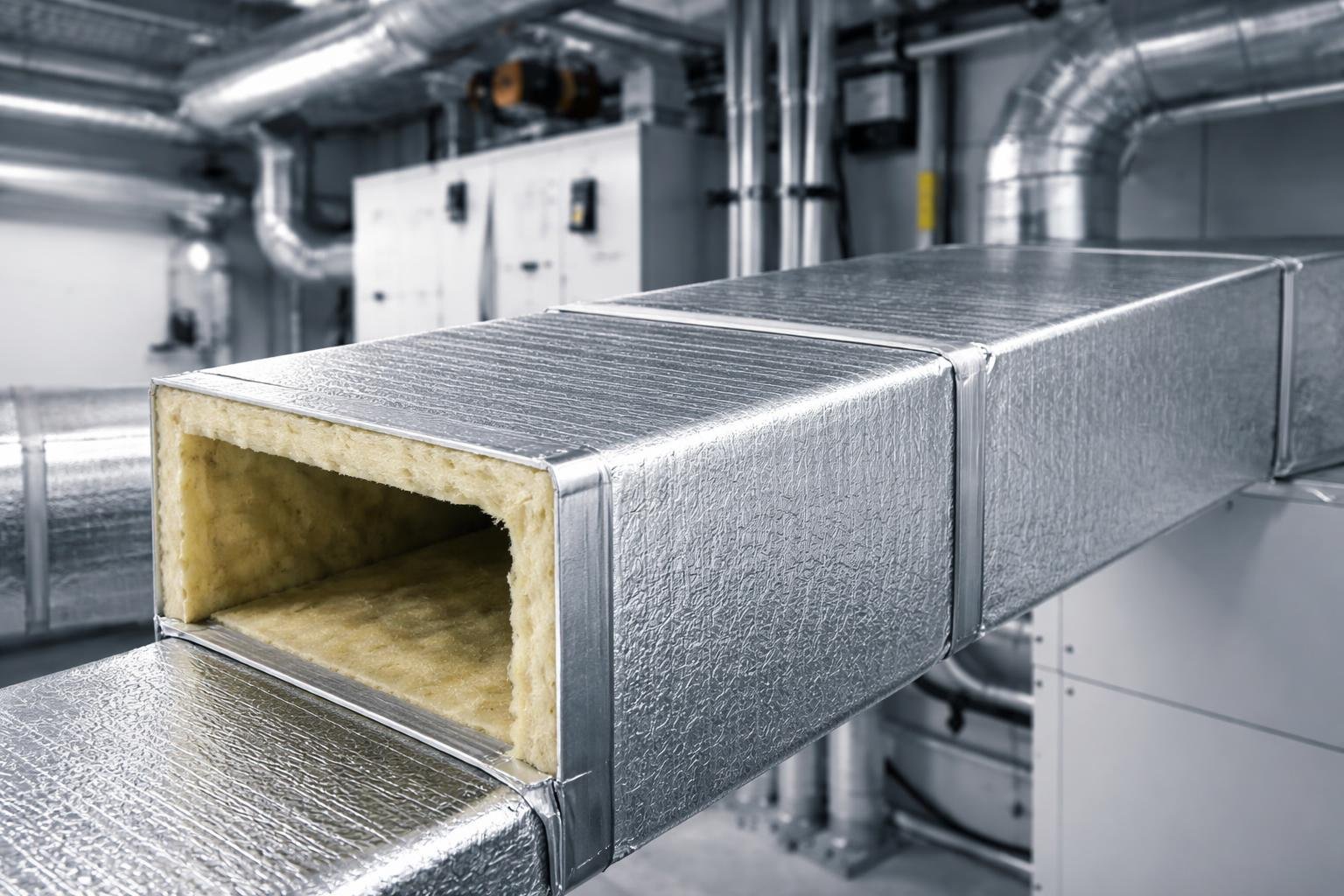
Air leakage ranks as one of the most critical performance problems in HVAC duct systems, and proper material selection combined with correct installation methods can significantly reduce energy waste and pressure imbalances.
When your ductwork leaks conditioned air into unconditioned spaces, you lose money on every heating and cooling cycle.
The closed-cell structure in quality pre-insulated panels naturally resists air movement through the duct walls.
Your choice of duct board material affects your system’s long-term performance and maintenance costs.
Phenolic duct systems deliver superior thermal performance and reduce air leakage without extra insulation layers.
Understanding how these systems work and what features actually matter will help you make smarter decisions for your next HVAC project.
Key Takeaways
- Pre-insulated duct boards combine insulation and air distribution into one material that reduces installation time and improves energy efficiency.
- Proper joint design and precision fabrication are essential to minimize air leakage and maintain system performance over time.
- High-quality pre-insulated panels with closed-cell foam cores provide better thermal resistance and lower air permeability than traditional wrapped ductwork.
Understanding Pre-Insulated Duct Board in HVAC Systems
Pre-insulated duct panels blend structural strength and built-in insulation in a single product, so you don’t need to wrap metal ducts with extra insulation layers.
These systems help reduce energy loss, save installation time, and deliver better air tightness than traditional methods.
Key Features of Pre-Insulated Duct Boards
Pre-insulated duct panels integrate several functional layers into one unit.
The core features insulation material sandwiched between protective surfaces like aluminum foil or galvanized steel.
These pre-insulated ductwork systems are made to precise dimensions in factory settings.
The edges come with interlocking connections—think tongue-and-groove joints—for quick assembly on site.
The panels keep thermal resistance high with low U-values, so you minimize heat transfer between the air inside and the surrounding environment.
This design helps prevent condensation on duct surfaces by keeping internal temperatures stable.
Your pre-insulated duct system arrives ready to install with moisture-proof and flame-retardant properties already built in.
The lightweight construction makes handling easier than metal ducts, especially in tight spots like ceilings or crawl spaces.
Common Types: Phenolic & Polyurethane Duct Panels
Phenolic duct systems use phenolic foam as the insulation core.
This foam delivers excellent fire resistance and produces minimal smoke during combustion.
Phenolic ductwork keeps its structural integrity at high temperatures and resists moisture absorption.
Polyurethane-based panels feature closed-cell foam for top-notch thermal performance.
The material blocks air and moisture penetration effectively and is lighter than many alternatives.
| Feature | Phenolic Ducts | Polyurethane Ducts |
|---|---|---|
| Fire Resistance | Excellent | Good |
| Thermal Performance | Very Good | Excellent |
| Moisture Resistance | Very Good | Excellent |
| Weight | Light | Very Light |
Both types meet building codes for fire safety and smoke diffusion.
Your choice depends on project needs—temperature ranges, fire ratings, and budget all come into play.
Comparison With Traditional Insulated Ductwork
Traditional metal ductwork needs separate insulation after fabrication.
Workers wrap ducts with fiberglass or other materials and then seal all joints and seams.
This process bumps up labor time by 30% to 50% compared to pre-insulated duct installation.
Air leakage rates show a big difference between the two systems.
Pre-insulated duct panels hit air leakage rates as low as 1% to 2% of total airflow thanks to factory-sealed joints.
Poorly installed metal ducts with separate insulation can leak 5% to 10% of conditioned air.
Space requirements also differ.
A 200mm metal duct with 50mm external insulation totals 300mm in thickness, but an equivalent pre-insulated duct panel keeps the insulation within its profile, shrinking the overall footprint.
Your maintenance needs drop with pre-insulated systems since the insulation layer won’t degrade, shift, or separate from the duct surface over time.
Metal ducts might need insulation replacement or rust treatment, which adds ongoing costs.
Air Leakage: Impact and Reduction Strategies
Air leakage in duct systems can drop HVAC efficiency by up to 20% and drive up energy costs.
Pre-insulated duct board tackles this problem with factory-sealed joints and smart material design that creates nearly airtight connections.
Why Air Leakage Matters in HVAC Systems
Air leakage is one of the biggest performance risks in your HVAC system.
When conditioned air escapes through gaps and poorly sealed joints, your system has to work harder to keep temperatures where you want them.
Department of Energy research shows that poorly sealed duct joints can cut system performance by as much as 20%.
This leads to several headaches for your building.
Energy loss means higher utility bills.
Your heating and cooling equipment runs longer cycles to make up for lost air.
Pressure imbalances show up in your duct network—some rooms get too much airflow, others too little.
System inefficiency just keeps piling up over time.
How Pre-Insulated Duct Board Minimizes Air Leakage
Pre-insulated ductwork uses integrated sealing systems that beat traditional duct construction.
The closed-cell structure of the insulation core creates a natural barrier against air movement.
Factory-sealed systems ensure ultra-low leakage rates that exceed SMACNA Class 3 or better.
Systems like Kingspan KoolDuct feature virtually airtight, leak-free jointing that keeps energy loss minimal.
Key design features that reduce leakage include:
- Invisible flange systems with continuous sealing surfaces
- High-density foam cores with uniform cell structure
- Strong adhesion between insulation and facing materials
- Precision-cut edges that align tightly during assembly
The jointing method really matters.
PVC or aluminum invisible flanges create connections without exposed gaps, and proper adhesive at all joint interfaces ensures airtight performance if you install it right.
Testing and Verifying Airtightness
You need to check that your ductwork meets specified leakage rates.
Testing confirms that installation quality matches the engineered performance of your pre-insulated duct board.
SMACNA provides leakage class ratings from Class 1 through Class 6.
Pre-insulated ducts usually hit Class 1-3 leakage ratings that help HVAC performance stay sharp.
Standard testing procedures include:
- Pressurizing duct sections to operating pressure
- Measuring air loss over a set time
- Calculating leakage rate per square foot of duct surface
- Comparing results to SMACNA standards
Your testing should happen before you cover ductwork with ceiling finishes.
This way, you can spot and fix leaks while joints are still easy to reach.
Document your test results to show compliance with project specs and energy code requirements.
Thermal Efficiency and Energy Savings
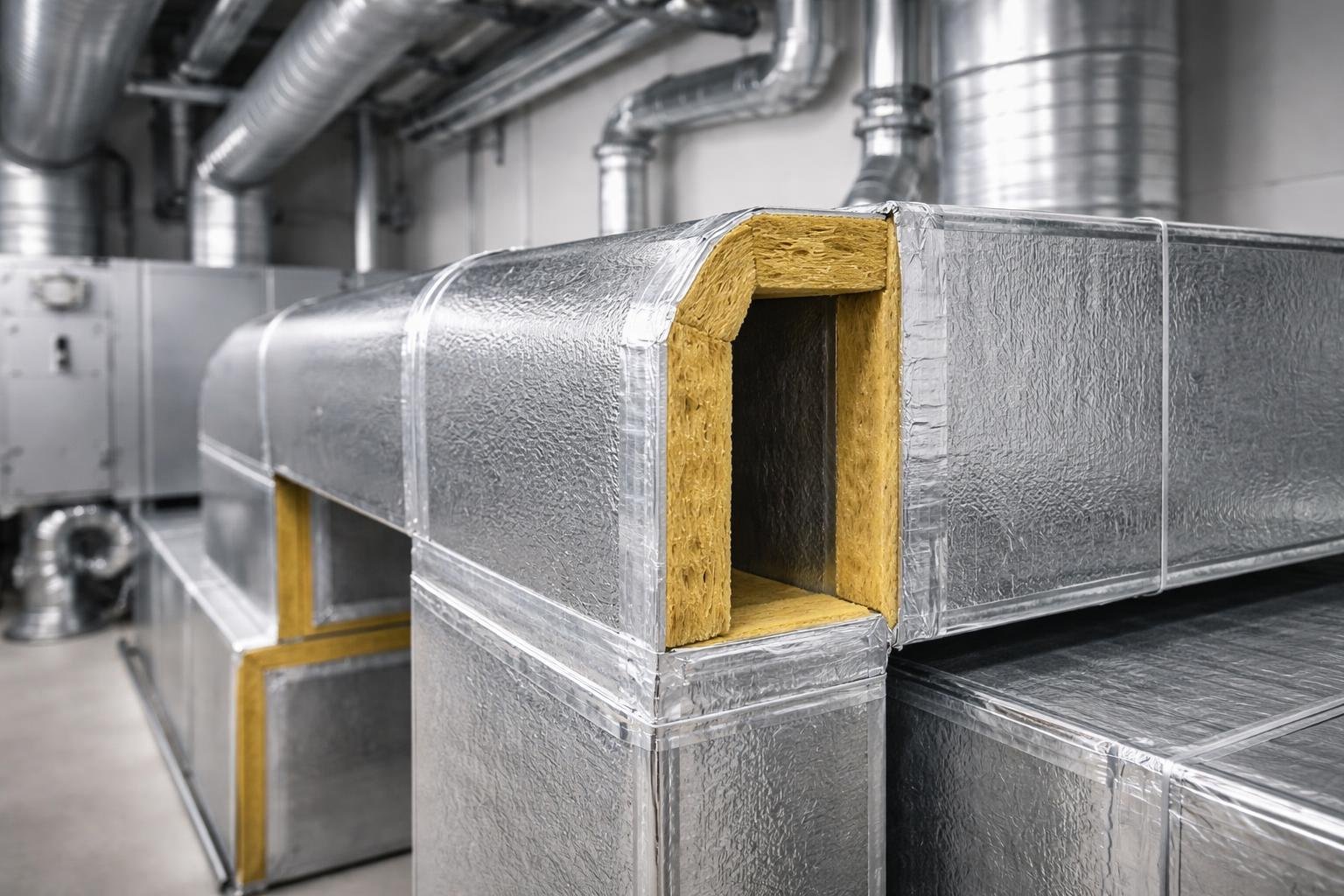
Pre-insulated duct boards help lower energy consumption by keeping air temperatures steady as it moves through the system.
Duct leakage and thermal loss can waste up to 30% of energy in many buildings, so solid insulation really matters for HVAC performance.
How Pre-Insulated Duct Boards Enhance Thermal Efficiency
Pre-insulated duct boards keep conditioned air at the right temperature by forming a continuous thermal barrier around your ductwork.
Unlike field-applied insulation, these boards have the insulation built right into the duct during manufacturing.
Phenolic duct systems can reach R-values of R-12 or higher.
This stops heat gain during cooling season and heat loss during heating months, whether your ducts are inside, outside, or on the roof.
Key thermal advantages include:
- Uniform insulation thickness throughout the system
- No gaps or compression points that reduce effectiveness
- Factory-controlled quality that eliminates installation variables
- Sealed joints that prevent thermal bridging
With PID air duct panels, you get reliable performance and avoid the headaches of traditional ductwork, where installers have to wrap insulation around metal ducts by hand.
Energy Savings in Residential and Commercial Applications
Expect real utility cost reductions when you install pre-insulated duct boards.
Good insulation keeps temperatures steady and cuts energy loss across your entire system.
Commercial buildings tend to see shorter HVAC runtimes because less conditioned air leaks out as it’s distributed.
Your equipment runs more efficiently instead of working overtime to make up for thermal losses.
Homes benefit too, with more even temperatures from room to room.
No more hot or cold spots caused by heat sneaking through weak insulation.
Sealing and insulating ducts can let you downsize to smaller HVAC units that cost less up front and use less energy each month.
That efficiency often pays you back over time through lower utility bills.
Role of Insulation Material in HVAC Performance
Your choice of insulation material really shapes your system’s thermal efficiency.
Pre-insulated phenolic duct board keeps air temperatures steady with less energy than basic sheet metal ductwork.
Phenolic foam delivers great thermal resistance per inch of thickness.
This means you can hit high R-values without making your ductwork bulky or awkward.
Insulation must also resist moisture to keep its thermal properties over time.
Phenolic materials hold their R-value even in humid or damp conditions, which is a huge plus.
The closed-cell structure blocks air infiltration right through the insulation.
This way, your thermal barrier works consistently across the whole duct surface, instead of letting heat sneak through porous spots.
Fabrication and Installation of Pre-Insulated Duct Boards
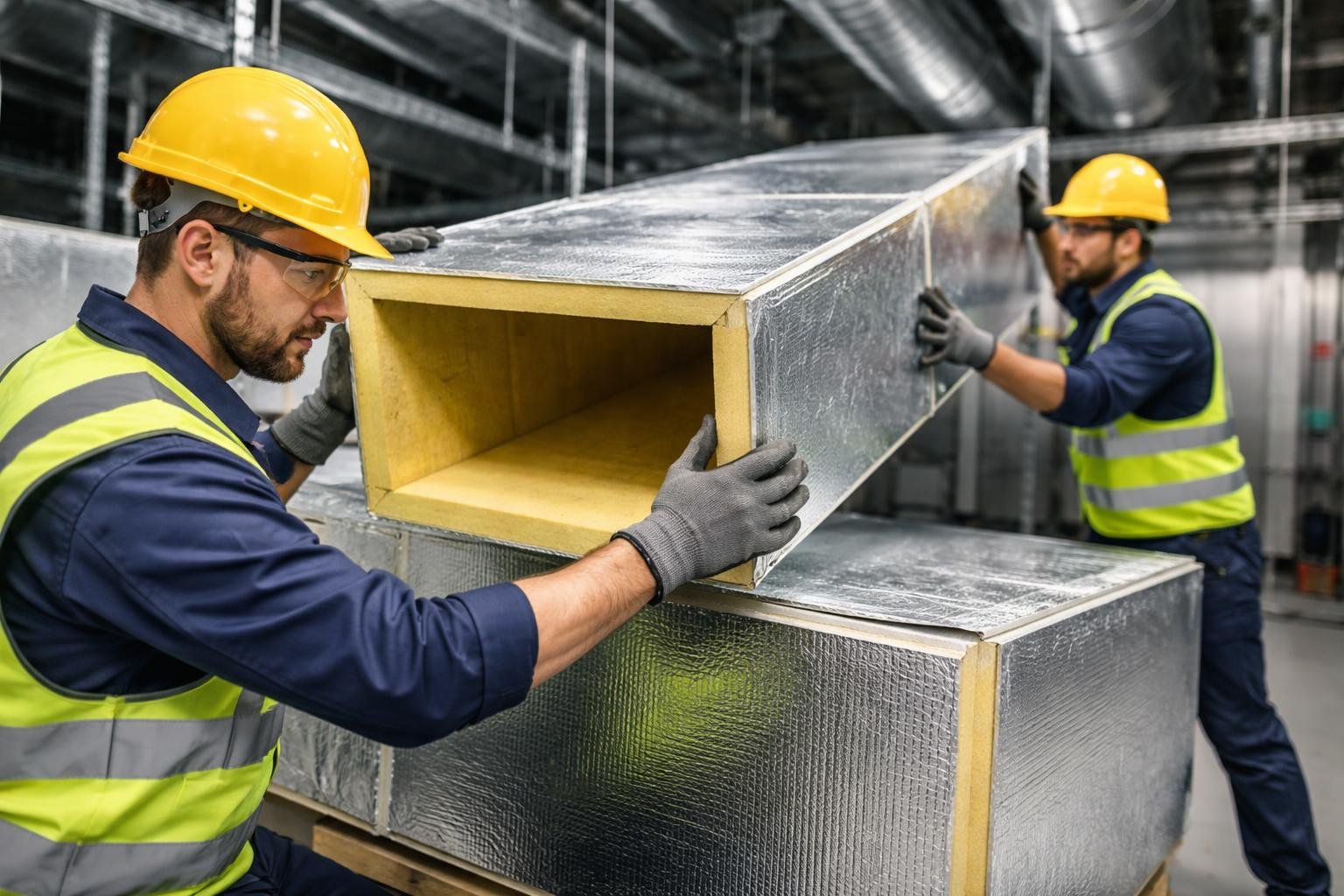
How you fabricate and install your ducts directly affects performance and efficiency.
The right tools, careful attention to detail, and solid sealing methods help your HVAC system run at its best with barely any air loss.
Duct Fabrication Methods and Tools
Making pre-insulated duct panels calls for special tools and techniques to get clean, accurate cuts.
You’ll need grooving tools to cut 45-degree angles along each panel edge, so the material folds neatly into a rectangle.
Start by tracing your duct outline onto the rigid panel with a marker and straightedge.
Double-check your measurements before cutting, since the 45-degree cuts give you the best surface area for gluing and strong joints.
Special cutting equipment lets you work with precision, whether you’re using hand tools for small jobs or automated machines for big commercial projects.
Systems like KoolDuct use phenolic foam panels that need fabrication methods tailored to their material properties.
Installation Best Practices
Before installing, consider space needs and structural support.
Pre-insulated systems weigh less than metal ducts, so they put less strain on your building’s structure.
Plan your duct layout to keep joints and connections to a minimum.
Fewer joints mean fewer leak points and faster installation, which is always welcome.
You can often mount these systems right against the ceiling to save space.
Be gentle with the panels to avoid damaging the insulation core or the facing material.
Store panels in a clean, dry spot out of direct sunlight, and check for any cracks or damage before you start.
Even small cracks can lower your system’s efficiency.
Connection and Sealing Techniques
Use HVAC-grade adhesive along every edge where panels meet.
Press the pieces together and hold them until the glue sets for a tight, airtight seal.
After gluing, fold the panels along the V-grooves to shape your rectangular duct.
Crisp, accurate folds help maintain strength and smooth airflow.
Seal all joints with aluminum self-adhesive tape to block air leaks at seams.
Cover every connection point completely, pressing the tape down so it sticks to both surfaces.
Flanging and reinforcing the ducts adds strength at joints.
Bend the edges to create flanges, then screw or rivet sections together.
Add metal strips or brackets at stress points to keep everything solid under pressure.
Apply sealant at all final joints to finish your airtight system.
Product Variants and Notable Systems
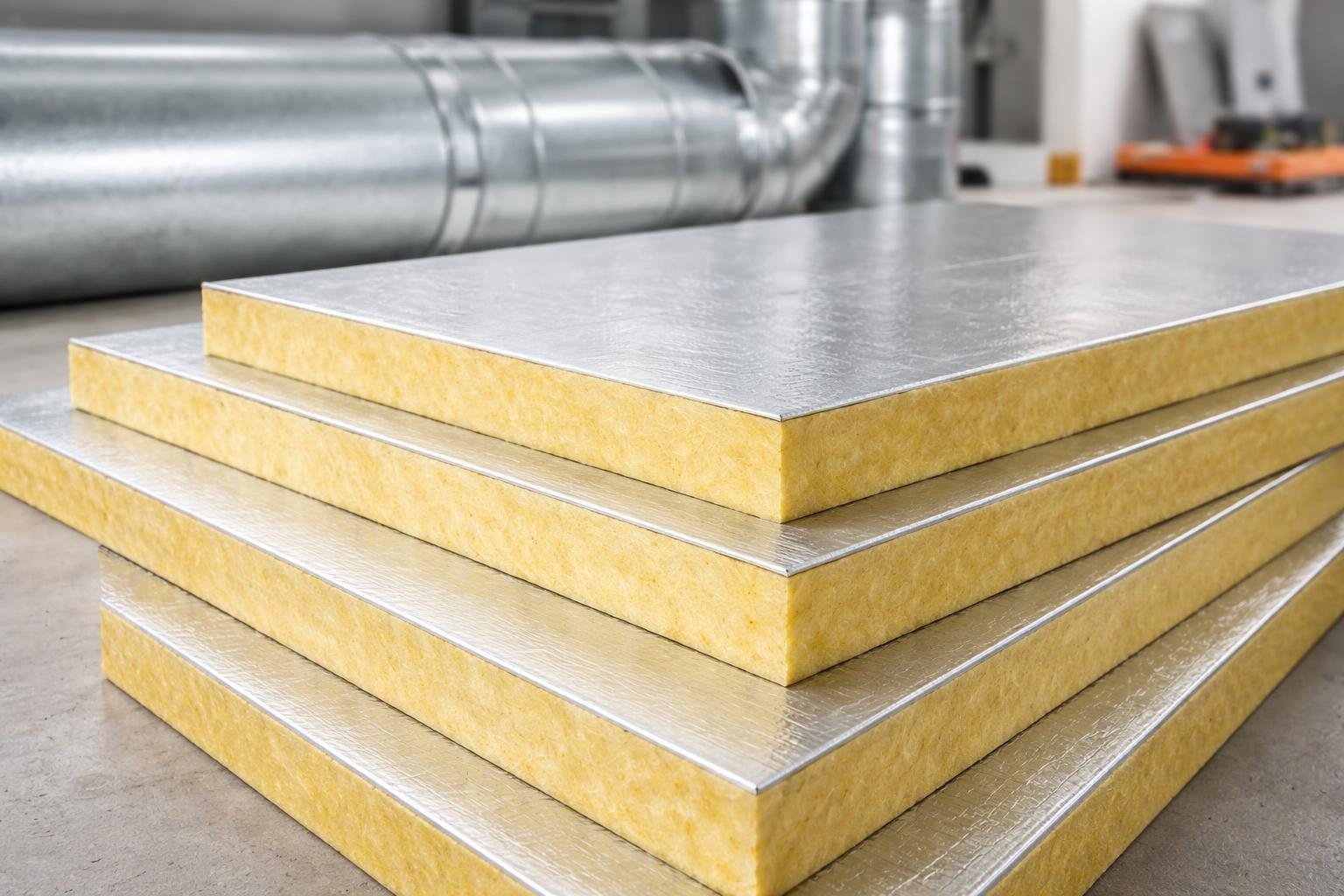
Plenty of manufacturers make pre-insulated duct systems with different insulation materials and performance specs.
You’ll find phenolic, polyurethane, and polyisocyanurate options, each with their own accessories for proper installation.
Kingspan KoolDuct and Its Advantages
The Kingspan KoolDuct System features a closed-cell phenolic foam core for high R-values and very little air leakage.
This system is much lighter than old-school metal ductwork, which cuts installation time and lowers the weight on your building’s structure.
You can install KoolDuct flush to ceilings, which frees up more space in your building.
The rigid insulation core isn’t fibrous, so there’s no risk of fibers getting into your airstream.
The system comes with specialized panels, fabrication methods, and couplings that all work together.
Energy-efficient phenolic ductwork delivers some of the highest insulation values you’ll see in commercial HVAC.
Pre-Insulated Duct Panel Options
You’ve got several insulation core materials to pick from when choosing pre-insulated duct panels.
PU and PIR pre-insulated duct panels offer different levels of thermal performance for modern air distribution.
Common panel types include:
- Phenolic foam panels – Highest R-values and fire resistance
- Polyurethane (PU) panels – Good insulation with cost efficiency
- Polyisocyanurate (PIR) panels – Enhanced thermal stability and performance
GFI’s PID air duct panels combine rigid foam insulation with solid structural stability.
They keep air from leaking and help you cut energy use in your HVAC system.
Accessories and Components for System Compatibility
Your pre-insulated duct system needs the right accessories to keep airtight connections and strong structure.
Flanges connect panel sections and seal joints to keep air from escaping.
Spiral ducts handle curves and transitions, while specialized fittings help you with elbows, tees, and reducers that fit your panel system.
Essential components include:
- Connection flanges
- Corner pieces and elbows
- Transition fittings
- Sealing gaskets
- Mounting brackets
These accessories help your ductwork maintain steady insulation and minimal air leaks throughout the installation.
Just make sure each component matches the panel type you’re using for the best results.
Long-Term Performance, Durability, and Maintenance
Pre-insulated duct board systems last for years thanks to their moisture-resistant construction and sturdy build. You’ll find your maintenance demands drop a lot compared to old-school ductwork.
Design flexibility means you can install these systems across all sorts of buildings and climates. They really fit in almost anywhere.
Longevity and Protective Features
Pre-insulated duct board holds its thermal performance for decades—assuming you install it right. The materials block moisture, which stops mold and keeps the insulation from breaking down like it does in conventional systems.
Phenolic ducts stand up to moisture, mold, and chemicals, so they keep temperatures steady in humid or industrial areas. The hydrophobic nature keeps water out of the insulation layer.
Your system skips those classic failures you get with soggy insulation. The rigid build shrugs off damage during install and keeps its shape over time.
PID ductwork made from high-performance materials is getting popular in modern builds because it just lasts. You don’t have to deal with denting, crushing, or tears like you do with metal ducts wrapped in insulation.
Fire-resistant features add another layer of safety. These insulated panels use flame-retardant materials that meet code without giving up on thermal performance.
Maintenance Requirements
Maintenance gets a lot easier with pre-insulated duct board. The sealed design cuts down on dust inside the ducts, so you won’t need to clean them as often.
Lower maintenance means fewer service calls and less downtime, so your system’s more reliable. You’ll spend less on labor over the years.
The integrated insulation also means no more worrying about sagging or compressed wraps that need fixing.
Visual checks focus on the joints and surface, not complicated layers. You can spot problems fast without tearing into insulation covers.
Usually, you just need to check the sealing tape and fasteners every so often. That’s about it for routine upkeep.
Design Flexibility and Application Considerations
Pre-insulated duct board adapts well to different building layouts and tight spaces. The panels are light, so you can install them where heavy metal ducts just aren’t practical.
You’re able to run systems through narrow spots without losing out on insulation thickness. The material cuts and shapes easily on-site with regular tools, so custom fittings for tricky layouts aren’t a hassle.
Polyurethane duct board balances insulation, strength, and durability, making it a solid choice for commercial and industrial HVAC jobs.
Your crew can work quickly without needing specialized gear. Climate does affect which material you should pick—hotter or colder zones need higher R-values, while milder climates work with standard thickness.
Both indoor and outdoor installs benefit from the moisture resistance. If you’re putting ducts outside, think about adding a UV-protective coating.
Frequently Asked Questions
People often have questions about how pre-insulated duct board performs, how it’s installed, and what kind of maintenance it needs. All of that impacts HVAC efficiency and running costs.
How does duct board compare with sheet metal ducts in terms of energy efficiency and heat loss?
Pre-insulated duct board gives you built-in thermal protection that cuts heat loss better than bare sheet metal. The insulation is part of the material, so you don’t get thermal bridging like you do with metal fasteners touching metal ducts.
With sheet metal, you have to add external insulation to get similar R-values. That takes more time and can leave gaps where wraps meet up.
Duct board systems usually have R-values from R-4 to R-8, depending on thickness. Metal ducts with fiberglass wrap can hit R-6 to R-8, but only if the wrap goes on perfectly—no gaps or squishing.
Energy efficiency depends on both insulation quality and how well the system keeps air from leaking out. If you seal duct board joints right, you’ll usually get less leakage than with metal ducts that have sloppy joints.
What are the most common causes of air leakage in duct board systems, and how can they be prevented?
Poorly sealed joints are the main reason duct board systems leak air. If installers skip the right sealant or don’t use enough, you’ll end up with gaps and lost air.
Misaligned panels also create trouble. Bad alignment during install can mess up both the strength and the insulation value.
If you don’t reinforce joints properly, they can pull apart later on. You need both sealant and good fasteners like flanges or rivets to keep air in.
Mixing and matching parts from different systems usually causes fit problems. Stick with components made for your duct board type.
Using the wrong cutting tools can damage panel edges, making it impossible to get a tight seal. Go with sharp utility knives or foam cutters for clean cuts.
Which sealing methods and tapes are recommended to ensure long-term airtight duct board joints?
High-performance sealant tape made for foam insulation gives you the best long-term seal. Standard HVAC tape just doesn’t stick well on foam and tends to fail with temperature swings.
Use both tape and mastic sealant at every joint for the best results. The tape holds things in place while mastic fills in any gaps.
Pre-insulated duct sealant tape should match the foam’s chemistry—polyurethane or polyiso. If you use the wrong adhesive, it can break down the foam or lose its grip over time.
Aluminum foil tape with acrylic adhesive is great for sealing facing-to-facing joints. Overlap the tape about an inch past the joint edge for a solid seal.
Reinforce big connections with aluminum flanges or steel corners. Rivets or screws through the flanges add support so vibration or pressure changes don’t break the seal.
How do insulation thickness and facing type affect HVAC performance and condensation control in ducts?
Insulation thickness sets the R-value and how much heat gets through the duct walls. Thicker boards cut energy loss but take up more space and cost more.
Standard duct board comes in 1-inch, 1.5-inch, and 2-inch sizes, which give you about R-4, R-6, and R-8. Pick your thickness based on climate and whether the ducts are in conditioned or unconditioned spaces.
Facing materials act as moisture barriers to stop condensation inside the insulation. Aluminum foil facings are the best for vapor resistance, especially in humid climates or when ducts carry cold air through warm rooms.
If you skip the vapor barrier, moisture can get in and ruin the insulation’s performance. Wet insulation also leads to mold and weakens the structure.
The facing also affects fire ratings and smoke development. Always check that your facing meets local code for where you’re installing.
What installation practices are critical to maintaining airflow, static pressure, and low noise in duct board runs?
Cut duct board with sharp tools to keep the inside smooth. Rough edges add friction and turbulence, which messes with airflow and boosts static pressure.
Keep the duct’s cross-section consistent so you don’t get pressure drops. Don’t crush or squeeze panels during install—it chokes airflow and makes the system work harder.
Line up joints properly so the inside stays flush. Even tiny edges sticking out can make whistling noises at high speeds.
Try to limit sharp bends and sudden transitions. If you have to change direction, use gradual angles instead of hard 90s.
Secure every panel tightly to stop vibration and rattling. Loose panels get noisy and can pull apart over time.
Install supports without causing thermal bridges by using plastic or composite anchors, not direct metal-to-foam contact. Metal fasteners carry heat and cut into your insulation value.
How can air leakage and thermal losses in ductwork be tested and verified after installation?
Duct leakage testing uses pressurization equipment to see how much air escapes from the sealed system. A calibrated fan pressurizes the ductwork to 25 pascals, and gauges track the airflow needed to keep that pressure steady.
Results usually show up as CFM25. That stands for cubic feet per minute of leakage at 25 pascals of pressure.
Lower numbers here mean better sealing and less wasted energy. You can also figure out leakage as a percentage of total system airflow.
Leakage rates under 5%? That’s excellent. If you’re seeing numbers above 10%, something’s definitely wrong.
Thermal imaging cameras come in handy for spotting heat loss. They highlight temperature differences on duct surfaces, so hot or cold spots can reveal insulation gaps or missing sections.
Smoke testing is another useful trick. By blowing theatrical smoke into pressurized ducts, you can spot exactly where smoke escapes from joints—those are your leak points.
Post time: 4 月-03-2026